Training Program
Mayford Training Academy provides specialized professional training programs designed to enhance technical knowledge, strengthen safety capabilities, and develop industry-ready skills for professionals working in high-hazard industries. Our courses are developed by experienced engineering and process safety specialists, combining international best practices with practical industrial experience.
Specialized Industrial & Process Safety Categories
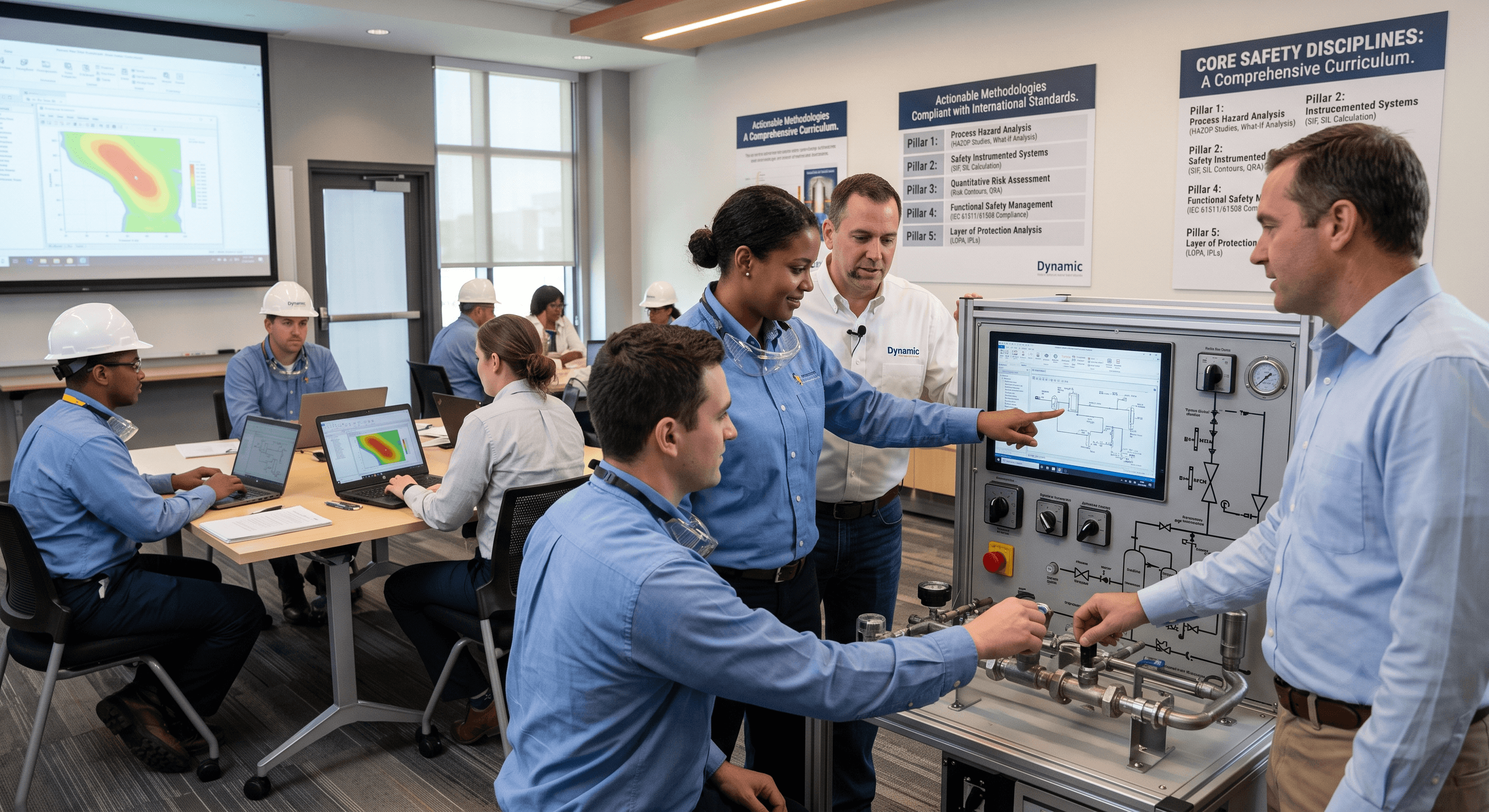
Our curriculum is meticulously designed around the five critical pillars of functional and process safety engineering. Whether you are leading a HAZOP study, verifying Safety Instrumented Functions (SIF), or calculating individual risk contours, our courses provide actionable methodologies compliant with international standards.
Learn In-Person, Live Virtual, or On-Demand
We understand the operational demands of high-hazard facilities. Mayford Training Academy offers three distinct delivery formats so your engineering and safety personnel can build competence without disruption.

2026 Professional Course Catalog

Process Safety Management is essential for preventing major industrial incidents and ensuring safe operation of high-hazard facilities. This training provides professionals with a comprehensive understanding of process safety principles, management systems, and industry practices required to identify hazards, control risks, and improve safety performance. Participants will learn how effective process safety management systems help organizations prevent incidents, protect assets, and build a strong safety culture.

HAZOP is one of the most widely used process safety assessment techniques for identifying potential hazards and operational problems in industrial processes. This training provides participants with practical knowledge of HAZOP methodology, study preparation, workshop participation, and risk identification techniques.
Safety Instrumented Systems (SIS) play a critical role in preventing major industrial incidents. This course provides participants with an understanding of SIL concepts, Safety Instrumented Functions (SIF), and the lifecycle approach required to design and maintain reliable safety systems.

Quantitative Risk Assessment provides a structured approach to evaluate industrial risks using frequency analysis, consequence modelling, and risk calculations. This training introduces professionals to QRA techniques used for understanding major accident hazards and making risk-based decisions.

Human factors play a significant role in industrial safety and operational reliability. This training helps professionals understand how human behavior, decision-making, workplace design, and organizational factors influence safety performance.

Ready To Make Your Operations Safer And More Intelligent?
Talk to our engineers about a study, a process safety program, or a digital transformation initiative tailored to your facility.